Remote-Controlled Artificial Sphincter Enters U.S. Trial
An investigational, remote-controlled artificial urinary sphincter is being tested in a 140-patient U.S. and French study for men with incontinence after prostate surgery. Early data from a first-in-human trial showed reduced pad use.
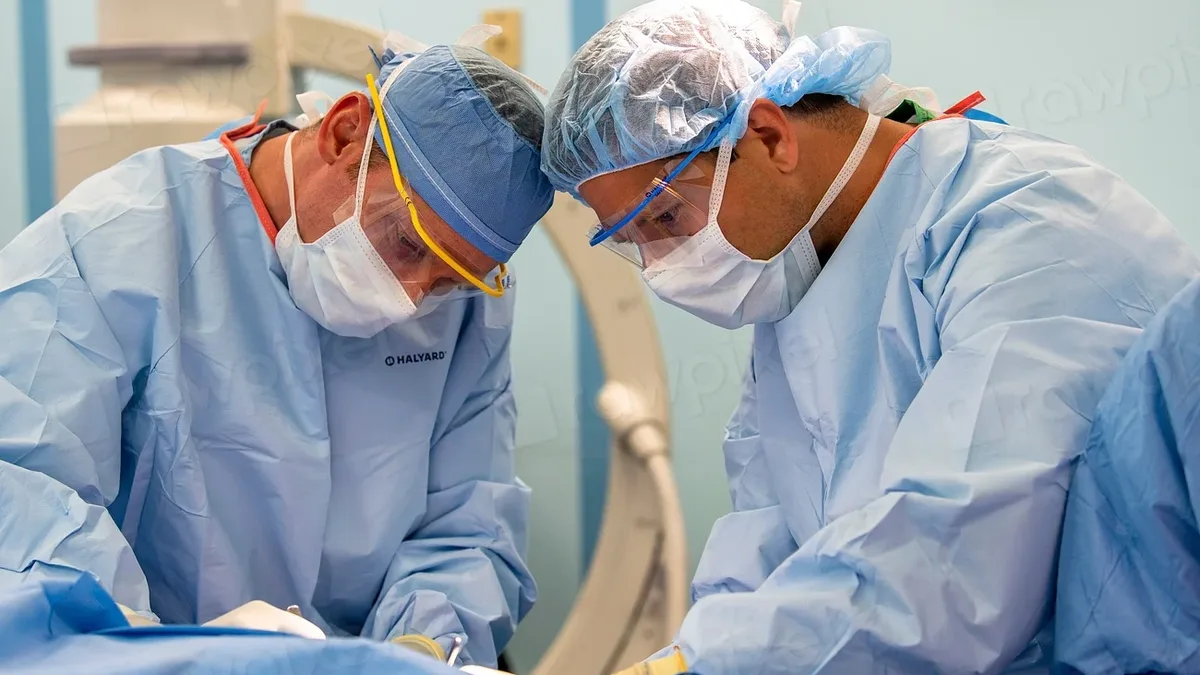
An investigational, remote-controlled artificial urinary sphincter has shown early promise for treating urinary incontinence in men after prostate cancer surgery. The device, called UroActive, aims to replace older models that require manual manipulation of a scrotal pump.
Andrew Peterson, MD, a urologist at Duke University Medical Center, explained the motivation for the new design. "Some men are really averse when you tell them about the old device and this pump that goes in the scrotum," he said. "They want to know whether they have to, basically, 'mash on my junk.'"
How the New Device Works
The UroActive system uses an external remote control to activate the implant with a button press. An electromechanical system adjusts pressure based on a patient's activity and needs. The device shuts off automatically after a programmed time.
Peterson compared its programmability to a high-end car. You can change every component of it. You can program the device to stay open for 1 minute, for 45 seconds, for 3 minutes.
The implant is about the size of a cardiac pacemaker and is placed in the abdomen. Its battery is designed for 10 years of continuous use. Programming is done via a tablet computer.
Trial Data and Patient Outcomes
A 140-patient prospective clinical study, called the SOPHIA2 trial, recently completed enrollment across 14 sites in the U.S. and France. Its primary goal is at least a 50% reduction in 24-hour sanitary pad weight at six months. Initial results are expected next year.
Earlier data comes from a first-in-human trial in France with six patients. At one year, all six achieved at least a 50% reduction in pad weight. All but one had at least 75% improvement. Their daily pad count fell from an average of 3.7 to 1.0. No devices required removal or revision surgery.
The French have 3-year data on those six men at this point, said Peterson. Patient satisfaction scores have been quite good.
Peterson noted that patients typically need several post-implantation office visits to fine-tune the device's pressure settings. After those two or three visits, we see patients go down to no pads or just a very small liner, he said. The improvement is quite striking.
Broader Context and Future Potential
The development follows the AUSCO trial, which confirmed the safety and efficacy of older artificial urinary sphincter devices and showed they improved patient anxiety, depression, and mental health scores. The SOPHIA2 trial includes the same patient-reported outcome assessments.
Peterson highlighted the flexibility of the new electronic system compared to older devices, which use water-filled balloons set to one of three pressure ranges. He envisions creating activity-specific modes. We can imagine different modes for the device depending on a specific need or activity.
The device targets a significant need, as up to 20% of men experience chronic urinary incontinence after prostatectomy. While the current trial is in men, French investigators have begun studying the UroActive device in women with stress urinary incontinence. Peterson also said future studies may evaluate it as a replacement for existing implants.