
The system
Medicare Part D premiums to jump 50% in 2027
Average monthly premiums for Medicare Part D prescription drug plans are projected to rise from $34 to $51 next year.
Average monthly premiums for Medicare Part D prescription drug plans are projected to rise from $34 to $51 next year.
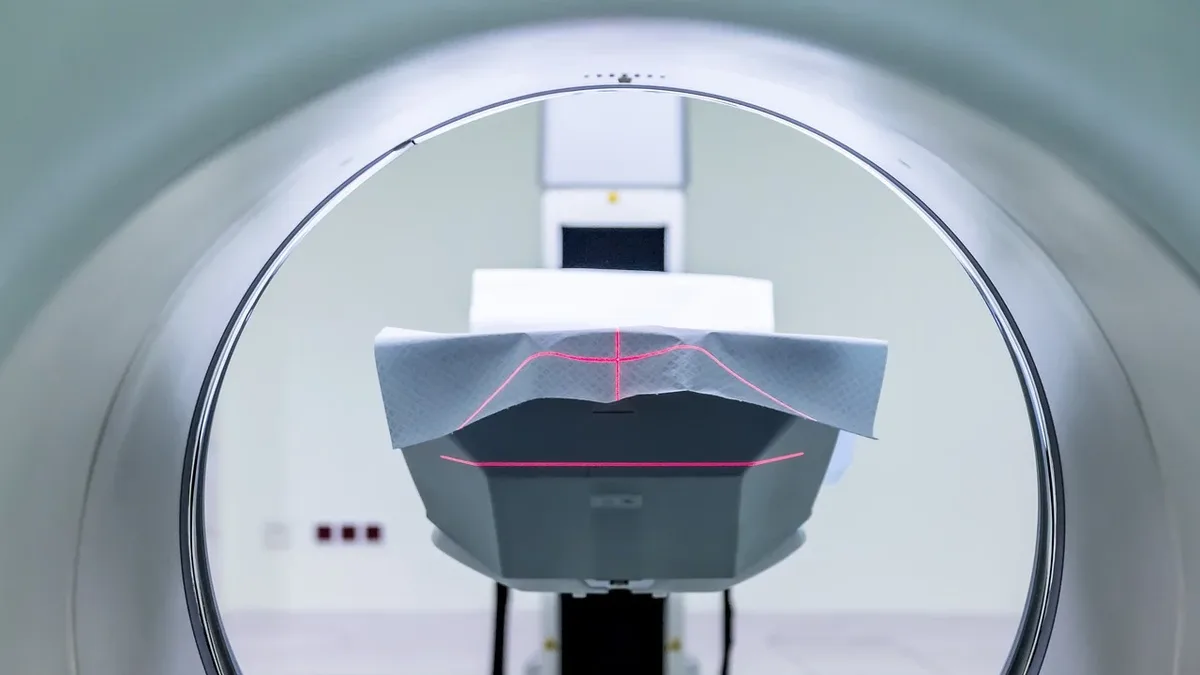
The UNICORN phase 2 trial shows neoadjuvant botensilimab plus balstilimab produced a 36% major pathological response in pMMR colon cancer and 100% in dMMR disease, with 100% 12-month event-free survival in both combination cohorts.

Flagship Pioneering merged three AI biotech startups into a new company, Etcelera, on October 29, 2026. The firm, led by Adrian Rawcliffe, combines AI with perturbation data to predict clinical trial success for drugs targeting hematology, metabolism, and immunology.
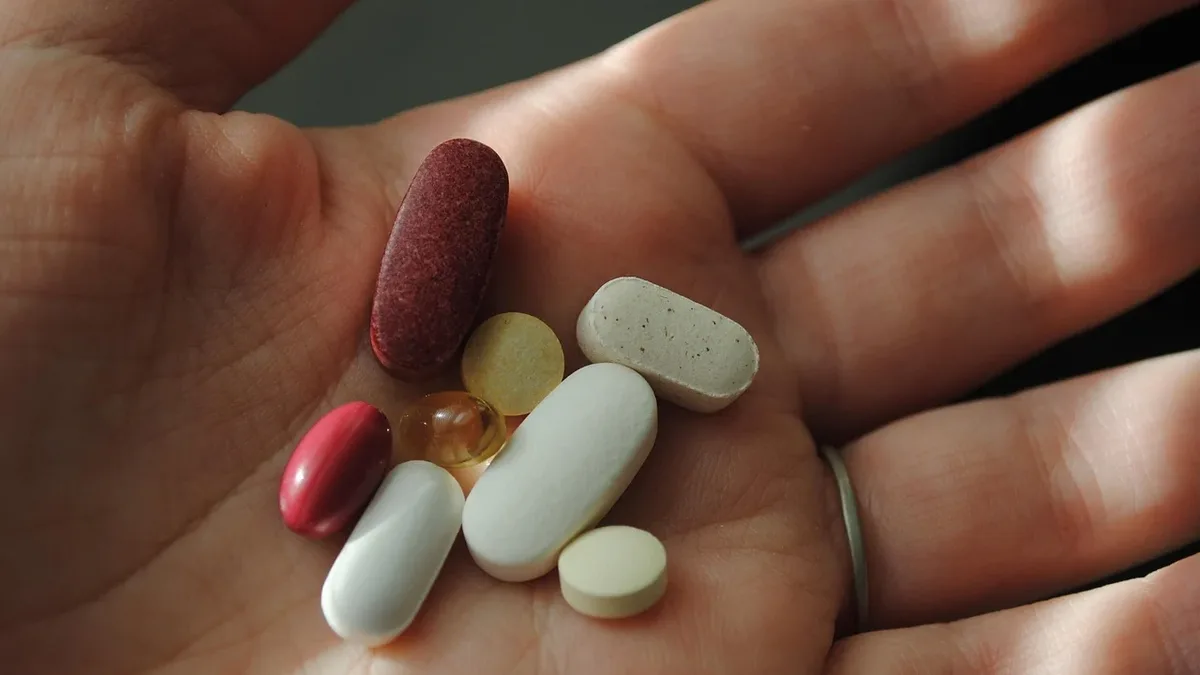
An FDA advisory panel narrowly voted to recommend lifting restrictions on six unapproved peptides, leading HHS to announce it will not enforce against compounders making them, a move that expands access but raises significant safety concerns.

A major measles outbreak in Pennsylvania, concentrated in Lancaster County's Amish communities, has resulted in over 1,350 cases and five deaths.
A new single-nucleus RNA sequencing atlas reveals that colorectal cancers in younger patients have a higher proportion of stromal cells and lower proportion of epithelial cells compared to tumors in older individuals. This fundamental difference in the tumor microenvironment, validated across large external cohorts, is linked to specific molecular subtypes and signaling pathways.

The FDA has granted accelerated approval to Voceryq, the first plasmid DNA-based immunotherapy for adults with recurrent respiratory papillomatosis, a rare disease caused by HPV.

A new biotech company, Setara Biosciences, has launched with $90 million to develop a therapy for Charcot-Marie-Tooth disease and overactive bladder, continuing the work of Actio Biosciences after its acquisition by Jazz Pharmaceuticals.

Long-term data from the phase II PHERGain trial shows a PET-guided, response-adapted strategy allowed many patients with HER2-positive early breast cancer to safely omit chemotherapy while maintaining a five-year invasive disease-free survival rate of 89.5%.

The U.S. Department of Homeland Security has banned imports from BGI Group, BGI Genomics, and MGI Tech, alleging ties to forced labor and genetic surveillance in China's Xinjiang region.

A 25-year U.K. study finds living near industrial facilities that pollute water with heavy metals and pesticides significantly increases the risk of developing progressive supranuclear palsy, a rare neurodegenerative disease.

Artiva Biotherapeutics is ending development of its AlloNK cell therapy and laying off most employees after two patient deaths in a Phase 2a trial, one linked to chemotherapy neurotoxicity.

A federal judge denied Novo Nordisk's request to block Eli Lilly's advertising campaign comparing weight-loss drugs Wegovy and Zepbound, finding no evidence of irreparable harm.

A phase 2 trial of neoadjuvant durvalumab plus chemotherapy in resectable and borderline resectable NSCLC achieved a 74.6% overall resection rate.
A Phase 3 trial for BioNTech and DualityBio's antibody-drug conjugate trastuzumab pamirtecan met its primary endpoint, delaying tumor progression in HER2-low metastatic breast cancer, though safety concerns and immature survival data temper its impact.










Star Therapeutics announced a $200 million venture capital financing round on October 23, 2026, to advance its rare disease biologics pipeline following the sale of its Vega Therapeutics subsidiary.

Christina Applegate's five-year misdiagnosis of multiple sclerosis shows persistent challenges in neurology, even as modern tools like the McDonald Criteria and central vein sign imaging accelerate accurate diagnosis.

The FDA has created the Neuroscience Advancement and Innovation Nexus, a new agency-wide program to coordinate regulatory science for brain conditions, with an initial focus on accelerating Alzheimer's prevention trials.
The AMPLIFY-7P phase 2 trial found camupepimut did not improve disease-free survival overall but showed significant benefit in ctDNA-negative pancreatic cancer patients.

A Phase 3 trial shows Moderna's intismeran vaccine combined with Merck's Keytruda reduces the risk of recurrence or death in high-risk melanoma patients by 42% versus Keytruda alone, with regulatory approval possible by 2027.

A scoping review finds ADHD medications lisdexamfetamine and atomoxetine significantly improved self-reported executive function in perimenopausal women, though objective cognitive test scores did not change. Researchers highlight the need for larger trials to confirm efficacy and safety for this unapproved use.

The FDA has approved GSK and Ionis's RNA-based drug Hibsago, offering a functional cure for chronic hepatitis B in adults without cirrhosis after a six-month treatment course.

The FDA has released final guidance clarifying when software used alongside prescription drugs must be included in a drug's official label and submitted for agency review, establishing a clear regulatory pathway.
Merck KGaA is buying Silence Therapeutics for $1.3 billion to gain control of divesiran, an RNAi therapy showing positive Phase 2 results in polycythemia vera.

Estuary Biotherapeutics launched with $93 million in Series A funding to develop one-time gene therapies for autosomal dominant polycystic kidney disease.

Arrowhead Pharmaceuticals' RNAi drug ARO-MAPT reduced tau protein by an average of 73% in healthy volunteers, demonstrating significant target engagement via subcutaneous dosing.

The FDA has expanded approval of nogapendekin alfa inbakicept-pmln (Anktiva) with BCG to treat adults with BCG-unresponsive, high-grade papillary-only non-muscle invasive bladder cancer.
Reporting studies and trials as evidence: what was actually tested, in whom, and what it showed. Research areas groups the science, Clinical trials follows the pipeline, Regulation covers approvals, Evidence deals with how strong a finding is, and The system covers funding and publication.
No. Most published findings are early, small or in animals, and the piece says which. Nothing on this site is medical advice, and no reader should change anything about their treatment because of a summary.
They are reported as what they are. A piece names whether its source was a peer-reviewed paper, a preprint, a conference abstract or an institutional release, and links to it, because the type of source changes how much weight it carries.
Nobody is bylined and nobody is presented as a researcher or a physician. Pieces are written with automated assistance from the source material, crediting the publication or journal instead, as Sources and methods explains.
The Corrections page asks for the article address and the specific claim you believe is wrong. Corrections are made on the article with a dated note at the foot, and substantive ones are listed.
Yes, at /feed.xml, carrying every piece as it publishes. It needs no account and no key.