PET-Guided Strategy Enables Chemotherapy De-Escalation in HER2-Positive Breast Cancer
Long-term data from the phase II PHERGain trial shows a PET-guided, response-adapted strategy allowed many patients with HER2-positive early breast cancer to safely omit chemotherapy while maintaining a five-year invasive disease-free survival rate of 89.5%.

A PET-guided strategy enabled many patients with HER2-positive early breast cancer to safely avoid chemotherapy while maintaining excellent long-term survival rates. New five-year data from the phase II PHERGain trial shows a substantial proportion of patients can omit chemotherapy without compromising invasive disease-free survival, offering a validated de-escalation strategy.
The PHERGain trial was a multicenter, randomized, open-label, non-comparative phase II study conducted across 45 hospitals in seven European countries. It enrolled 376 patients with centrally confirmed HER2-positive, operable stage I-IIIA breast cancer, with tumors measuring at least 1.5 cm. Of these, 356 were randomized in a 1:4 ratio. Seventy-one patients were assigned to standard treatment (group A), receiving six cycles of docetaxel, carboplatin, trastuzumab, and pertuzumab. The larger response-adapted group (group B) included 285 patients who initially received trastuzumab and pertuzumab without chemotherapy. Patients with hormone receptor-positive tumors also received endocrine treatment when indicated.
Response-adapted treatment pathway
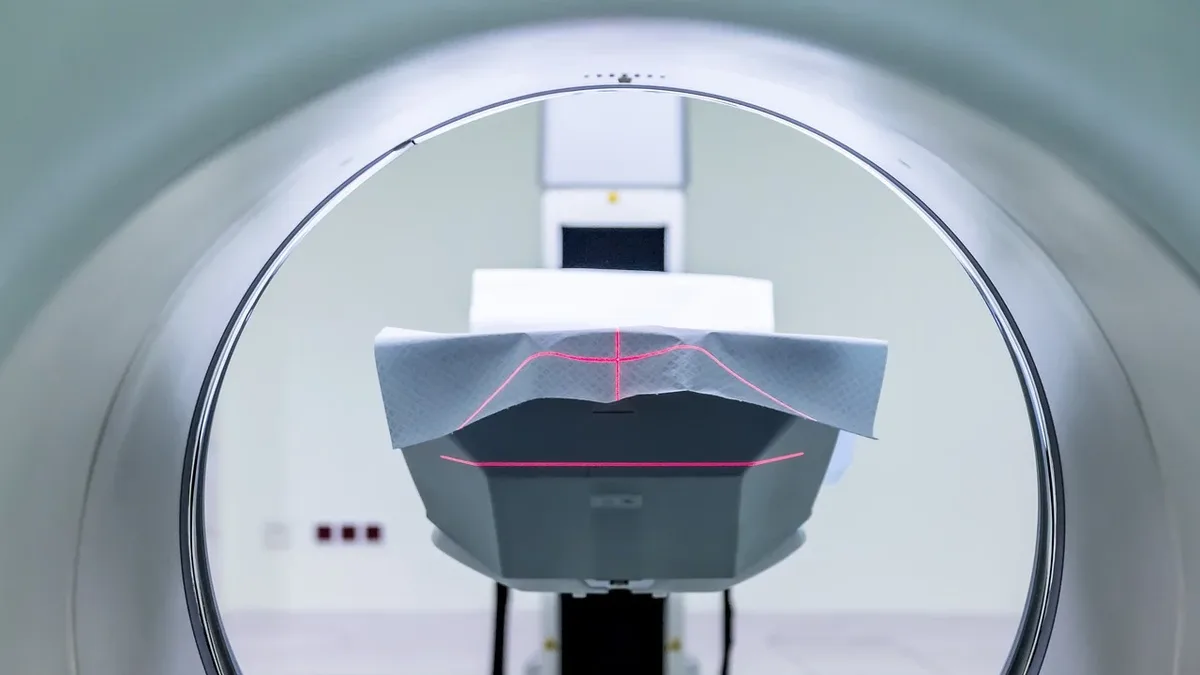
Treatment in group B was adapted based on early metabolic response. After two cycles, response was assessed using fluorodeoxyglucose positron emission tomography (18F-FDG-PET). Patients demonstrating at least a 40% reduction in maximum standardized uptake value continued chemotherapy-free HER2-directed treatment for six additional cycles. Those without an adequate metabolic response switched to docetaxel and carboplatin combined with trastuzumab and pertuzumab.
Following surgery, treatment was further refined by pathological complete response status. Patients in the response-adapted arm who had demonstrated an early metabolic response but did not achieve pCR received additional chemotherapy alongside dual HER2 blockade. Patients achieving both an early PET response and pCR could avoid chemotherapy entirely. All patients were planned to complete up to 18 cycles of trastuzumab and pertuzumab, with endocrine treatment and radiotherapy administered when appropriate.
Long-term invasive disease-free survival outcomes
At a median follow-up of 5.6 years, the five-year invasive disease-free survival among the 267 patients in group B who underwent surgery was 89.5%. The five-year distant disease-free survival estimate was 92.7%. In this group, 26 patients (9.7%) experienced an invasive disease event or death within five years after surgery. Most events were distant recurrences (5.2%) or second primary non-breast cancers (1.5%).
Among the 86 patients who were PET responders, achieved a pCR, and received no chemotherapy during the study, the five-year iDFS rate was 92.4%, with only one distant recurrence. The estimated five-year iDFS and distant disease-free survival rate for the 63 patients in the standard treatment group A was 96.7%.
Circulating tumor DNA biomarker insights
An exploratory biomarker analysis investigated the potential of circulating tumor DNA to refine treatment selection. Baseline ctDNA was detected in 71.0% of patients before starting neoadjuvant therapy. Detection was strongly associated with disease stage and nodal involvement.
| Disease Stage | Patients with Detectable Baseline ctDNA |
|---|---|
| Stage I | 33.3% (9/27) |
| Stage III | 93.2% (41/44) |
Early ctDNA clearance during treatment was associated with significantly higher pCR rates and improved long-term outcomes. The pCR rate was 48.4% among patients with early ctDNA clearance at cycle 3 day 1, compared to 22.0% for those with persistent detection. None of the patients with detectable ctDNA just before surgery achieved a pCR.
CtDNA status was a powerful predictor of recurrence risk. Five-year iDFS was 97.1% among patients without detectable baseline ctDNA compared with 86.7% among those with detectable ctDNA. Detectable ctDNA at baseline or during treatment was consistently associated with inferior invasive disease-free survival. In multivariable analyses, detectable ctDNA remained an independent predictor of iDFS at baseline and at the cycle 3 day 1 time point.
The article closes with the five-year iDFS estimate of 89.5% among patients who underwent surgery following the PET-guided, response-adapted treatment strategy.