Moderna-Merck Cancer Vaccine Shows Promise in Phase 3 Melanoma Trial
Moderna and Merck's individualized cancer vaccine shows promise in Phase 3 trial for melanoma.
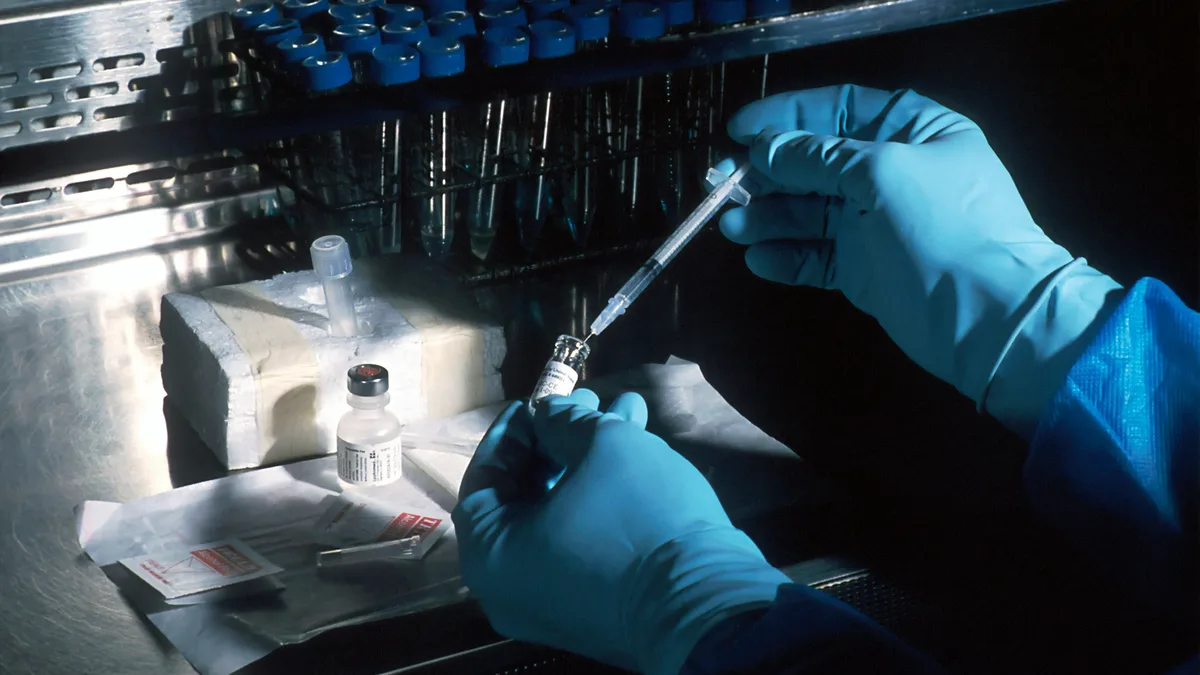
Moderna and Merck & Co. announced that their individualized cancer vaccine hit its main goals in a Phase 3 trial, delaying disease recurrence in people with melanoma and stopping its spread following surgery. The vaccine, combined with Merck's immunotherapy Keytruda, showed statistically significant and clinically meaningful improvements over Keytruda alone, according to independent data monitors.
Background on Cancer Vaccines
The concept of cancer vaccines has attracted billions of dollars in research and development over the years, but past efforts have been largely unsuccessful. Cancer experts attribute this failure to the focus on single antigens and the use of vaccines on people who are too sick to benefit. Moderna, which gained prominence with its COVID-19 vaccine, has been working on its cancer immunotherapy pipeline, and this latest development appears to be a breakthrough.
The individualized cancer vaccine, known as intismeran autogene or MRNA-4157, uses mRNA technology to detect up to 34 neoantigens on patients' tumor cells. This approach is tailored to each patient's disease profile, as determined through biological testing. The clinical strategy has been to focus on the adjuvant setting, where patients receive additional therapy to prevent disease return after primary treatment like surgery.
Trial Details
In the INTerpath-001 trial, 1,137 people were enrolled, with two-thirds randomized to receive the intismeran-Keytruda combination. According to analysts, a 20% risk reduction would be viewed as a clinical benchmark, while a 35% to 40% reduction would be considered clearly differentiated. In a Phase 2 trial of 157 people, the intismeran combination reduced the relative risk of death or recurrence by 44% over Keytruda alone.
| Treatment | Risk Reduction |
|---|---|
| Intismeran-Keytruda combination | 44% |
| Keytruda alone | 43% (compared to placebo) |
Commercial Promise
While the results are promising, analysts believe that a clearer view of the vaccine's commercial promise will emerge based on results in kidney cancer, expected later this year or early next, as well as bladder and non-small cell lung cancers. These cancer types are considered better targets for immune-based therapies because they are "hot" tumors, with immune cells that have infiltrated and can be activated. Moderna's share price more than doubled following the announcement, with some analysts projecting billions of dollars in sales from the vaccine in melanoma alone.